
Walking into the home of a long-term, securely attached couple can often feel like stepping onto the set of an avant-garde theater production. You might witness two grown adults communicating entirely in baby talk, staging elaborate indoor Olympics with a rolled-up pair of socks, or engaging in a solemn ritual of checking each other’s backs for rogue hairs. To the casual observer, these behaviors look like simple, chaotic fun.
However, psychological science suggests that this regression into pure silliness is actually a profound indicator of emotional health and neurological safety. When we feel truly secure in a relationship, our brains undergo a massive shift that completely alters how we present ourselves. This brings up a fascinating psychological question: is this intense desire to do weird things around your partner just one of those harmless fun facts of human behavior, or does it run deeper, serving as a creative healing mechanism for past relational trauma?
The Neurological Safety Net of Emotional Freedom
To understand why we become so wonderfully strange around the people we love, we have to look at how our brains process threat and safety. Every single day, we navigate a world that demands a high level of performance, forcing us to use a massive amount of mental energy to maintain social decorum, control our impulses, and present a curated version of ourselves to bosses, strangers, and acquaintances. This constant vigilance is managed by our prefrontal cortex, which acts as a strict internal editor.

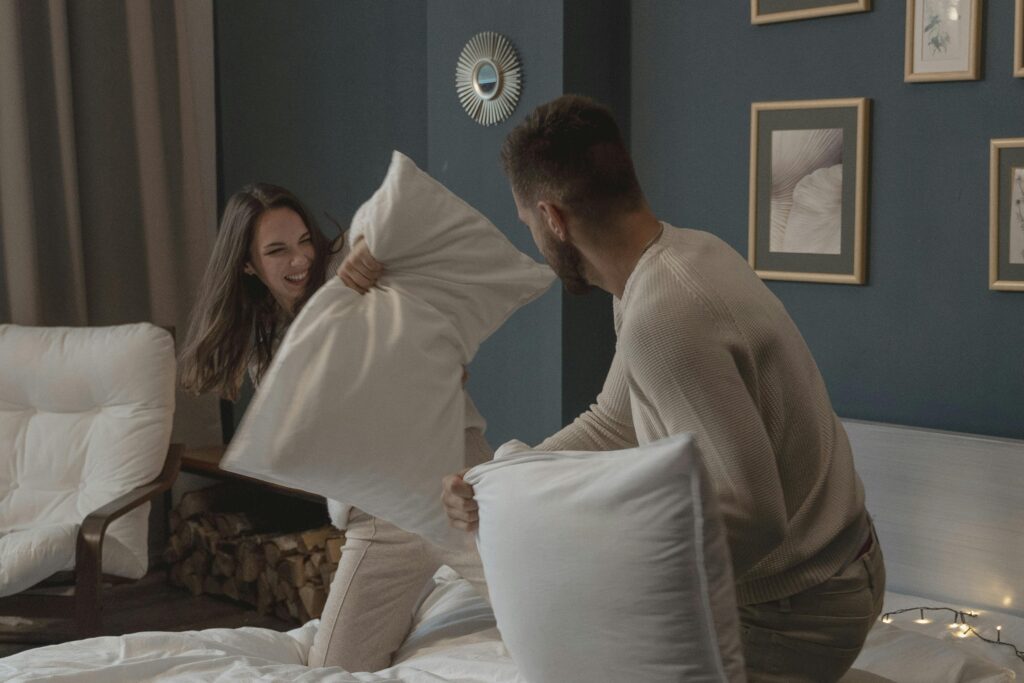
When you enter a genuinely safe romantic partnership, your nervous system finally receives the signal that the environment is clear of social threats. The amygdala, which scans for judgment and rejection, goes into a state of rest. As a result, the internal editor goes offline, allowing the brain to enter what psychologists call a low-defense state. In this space, you aren’t calculating how your actions will be perceived, which allows deeply suppressed, whimsical, and downright weird things to bubble up to the surface naturally within the relationship.
Why Healing from Past Emotional Stress Makes Us Playful
For individuals who grew up in chaotic, hyper-critical, or emotionally unstable environments, the freedom to be strange is far more than just a cute relationship milestone. It can actually serve as a powerful form of emotional rehabilitation. When a child learns that love is conditional on being quiet, perfect, or helpful, they often lock away their natural playfulness to survive. They develop a hyper-vigilant adult personality that’s always controlled, serious, and deeply afraid of making a mistake.
A good example of this is someone who grew up with a perfectionist, short-tempered parent and spent years learning to walk on eggshells. Once they get into a secure relationship, they might suddenly start doing things they never would have dared to do before, like intentionally burning the dinner toast and singing a goofy song about it, or hiding behind a door just to scare their partner.

When this person finally finds a partner who offers unconditional safety, that long-buried inner child suddenly feels secure enough to come out and play. The sudden urge to throw a couch cushion at your partner, speak in a ridiculous cartoon voice, or do a goofy dance in the kitchen is a beautiful, delayed expression of the carefree childhood you never got to experience. This means practicing these weird things together might actually be a subconscious sign that your nervous system is actively healing from past emotional survival modes.
The Evolutionary Purpose of Having No Filter
From an evolutionary perspective, shared strangeness serves a highly practical purpose in keeping humans connected. Early human tribes relied heavily on social cohesion to survive, and they needed ways to quickly differentiate between insiders and outsiders. When looking at the biological fun facts of relationship psychology, developing a private language, unique rituals, and specific inside jokes within a partnership acts as a modern version of that ancient tribal bonding.
When you and your partner share a bizarre habit that literally nobody else understands, you’re building an invisible fortress around your relationship. This shared vulnerability creates a powerful feedback loop of mutual trust. By showing your partner a side of yourself that’s embarrassing or unpolished, and having them respond with warmth and laughter, you’re constantly validating your emotional bond, making it much easier to handle the actual stresses of life together.

Embracing the Beauty of Your Inner Weirdo
Western culture often pushes the idea that maturity means being stoic, serious, and completely composed at all times. However, one of the most telling fun facts discovered by relationship researchers is that a total lack of silliness in a long-term relationship is often a sign of emotional distance, indicating that partners don’t feel safe enough to drop their guard.
Learning to celebrate the bizarre routines that develop between you and your person is one of the healthiest things you can do for your mental well-being. Whether you’re making up ridiculous songs about doing the dishes, or speaking in an entirely fabricated language, you’re actively practicing high-level emotional intimacy and giving your nervous system the deepest form of rest it can possibly experience.
Key Takeaways for the Secure Relationship
Understanding the deeper mechanics of your relationship quirks can help you appreciate your bond even more. True intimacy is built in the bizarre, unfiltered moments you share when the rest of the world isn’t looking.
- Being your absolute strangest self is the ultimate proof that your nervous system feels completely safe with your partner.
- For those who experienced stressful pasts, entering a silly, playful relationship state is a major sign of emotional healing.
- Lean into the invented words and strange habits, because those private rituals are what keep your emotional foundation rock-solid over time.
Now, we want to hear from you! What is that one incredibly bizarre habit, secret language, or unhinged kitchen dance routine that you and your partner only unleash behind closed doors? Drop your strangest relationship quirks in the comments below, let’s normalize the weirdness together!