


Kind of disorientation that happens when a relationship vanishes into thin air.
We’ve been conditioned to treat ghosting like a minor modern inconvenience, something we’re supposed to brush off with a shrug and a “well, their loss.”
It almost lands much deeper than we’re willing to admit. That’s because what hurts isn’t just the rejection itself, it’s the unfinished connection.
Human beings are wired for narrative, and when a story is cut off in the middle of a sentence, our brains get stuck in an agonizing loop trying to find the missing punctuation.
The Biology of the Sudden Disappearance
It’s helpful to realize that your brain doesn’t actually distinguish between “social pain” and “physical pain” as clearly as you might think.
Research into social rejection shows that when someone disappears without context, it activates the same neural pathways as a physical injury. Your nervous system is registering a sudden withdrawal of safety.
Because there’s no emotional landing or “closure”, your system stays in a state of low-grade alert.

You’re subconsciously waiting for a resolution that never comes, which is why ghosting feels so much more exhausting than a clean break.
You find yourself spiraling into questions like: “Did I say too much?” or “Was I not interesting enough?” even when you know, logically that someone’s silence is a reflection of their capacity.
It’s a biological glitch where your mind tries to solve a puzzle that’s missing half its pieces.
Why Modern Dating Makes Connection Feel Disposable
Your talking stages usually happened within a shared community, friends of friends, coworkers, or neighbors.
There was a natural accountability because you were likely to run into that person again. Today we’re navigating digital spaces built on volume and speed.
Options are constantly visible, and replacements feel immediate. This environment subtly shifts our behavior, making it far easier to exit a conversation without a word when things get “real” or “heavy.”
Even those casual, early-stage bonds create micro-investments of hope. When those openings are slammed shut without warning, your system registers a disruption of trust.
If this happens enough times, it leads to a very real kind of dating fatigue that changes how you show up for the next person.
The Trap of Self-Protection
After you’ve been ghosted a few times, it’s only natural to start building a fortress around your heart.
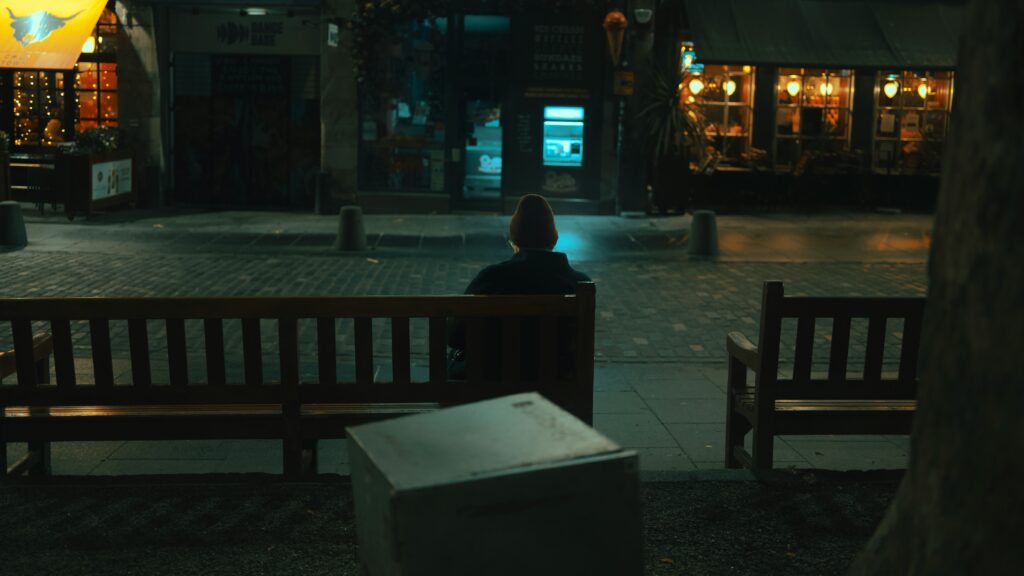
You might find yourself texting less enthusiastically, waiting hours to respond on purpose, or avoiding the deep questions altogether, it’s a survival tactic.
You’re trying to care less upfront so that if they disappear, you won’t feel the drop quite as sharply.
If you reduce your emotional presence to avoid the possibility of pain, you also reduce the possibility of real connection.
You start engaging from a guarded, braced position, and while that might protect you from the “ghost,” it also prevents steady, soulful intimacy from ever forming.
The goal should be to stay grounded. Being grounded means you’ve learned to pace your investment based on their actual consistency.
Protecting Your Heart Without Hardening It
Real protection looks like becoming a better observer of patterns, it asks yourself the gentle, necessary questions: “Do I actually feel calm with this person?” and “Do their actions match the words they’re sending at 11 PM?”
Instead of trying to decode their silence, you start to see the silence as information.
None of this is a magic shield, you might still get ghosted again. If you do, you’ll realize that choosing emotional integrity in a culture that normalizes disappearing is a quietly radical act.

Conclusion: Staying Soft in a Culture That Disappears
At the end of the day, being ghosted hurts because you were brave enough to be open.
And in a world that’s constantly telling us to protect ourselves, that openness is never something you should feel ashamed of.
We’re living in a dating culture that often prioritizes convenience over courage, and it’s easy to feel like you’re doing something wrong just by being human.
The real work here is learning how to stay grounded in who you are while you’re feeling the sting.
You’re allowed to acknowledge that it hurts without turning that pain into a story about why you aren’t “enough.”
You can start to notice patterns in how people show up without hardening into a person who suspects everyone’s motives, or learn to pace your heart without performing that exhausting, hollow indifference we see all over social media.
Noticing that being ghosted says everything about someone’s inability to handle a difficult conversation and absolutely nothing about how desirable or lovable you are.

Don’t let someone else’s silence convince you to quiet your own heart.
A Moment for You to Reflect
If you’re sitting with the sting of a fresh silence right now, take a second to remember that you aren’t the problem:
What’s one thing you’ve been blaming yourself for that actually belongs to the other person’s lack of communication?
How can you be a little more “grounded” in your next conversation without completely closing the door?
We’d love to hear your thoughts: Have you ever had a moment where you chose to stay open even after getting burned?
Share your story in the comments, it might be the exact thing someone else needs to read today to feel a little less alone in the digital void.
