

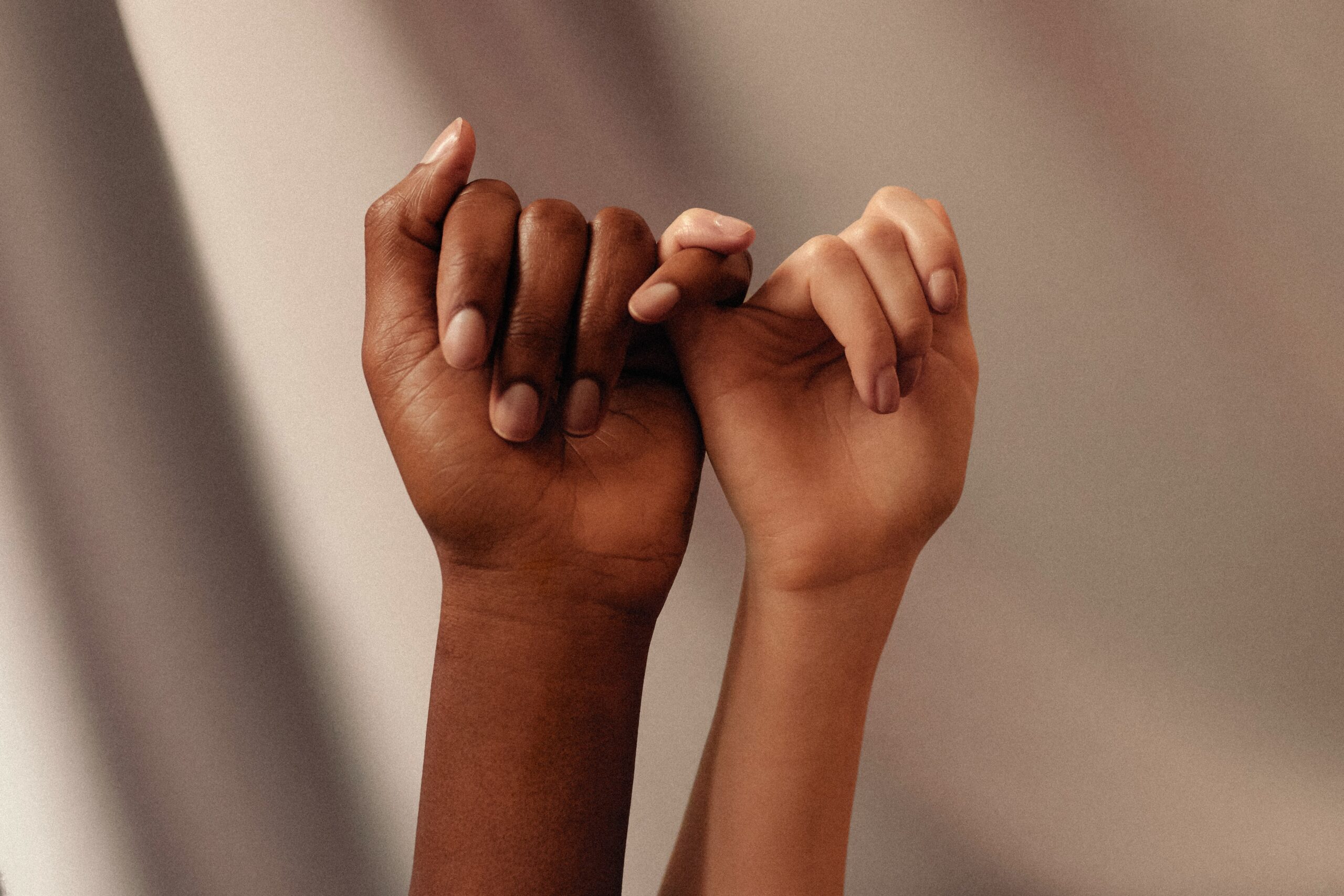
Following the end of a close friendship feels like a familiar voice is gone from your daily rotation, and a mirror you’ve looked into for years is suddenly missing.
That absence can be destabilizing because unlike romance, we’re often told that friendships are the “stable” background of our lives.
When we talk about these breakups, we usually focus on the “what,” the big fight, the slow drift, or the move to a new city.
What actually lingers is the “who,” it’s the way the loss shifts your sense of self, leaving you to realize that the grief is personal.
Losing the Co-Author of Your Identity
Close friendships quietly shape how we see ourselves in ways we don’t notice until the connection is severed.
A best friend is often the person who remembers exactly who you were before the big promotion, the messy divorce, or when you finally figured out your own style.
They hold the long version of your story. When they say: “You’ve always done this” or “This is so you,” you believe them because they’ve seen the evidence.
When that person leaves your life, it can feel like losing a co-author, you might find yourself feeling unanchored because a specific version of yourself existed most fully in that dynamic.
Maybe you were the loud, sarcastic one with them, or perhaps you were the only one they saw the reckless, hopeful side of.
It’s actually a sign that your internal map is updating. Research in social psychology shows our identities are relational, so when a pillar of your social world falls, your brain needs time to recalibrate.
The Grief We’re Taught to Minimize
Because society often frames friendship as lesser than romance, we’re frequently encouraged to minimize our pain.

Well-meaning people might tell you to just “make new friends” or shrug it off with a “that’s life.” While both might be true, they completely miss the point that grief is about attachment.
Attachment forms through years of shared vulnerability, repeated presence, and those tiny inside jokes that only make sense to the two of you.
When that pattern is interrupted, your nervous system takes a hit. Studies suggest that social rejection actually activates similar neural pathways to physical pain, which explains why the ache of a lost friendship can feel so surprisingly physical.
You might find yourself feeling restless, nostalgic at odd times, or oddly protective of memories that no longer have a place to land. These reactions are a biological way of honoring the fact that something meaningful existed.
Growth, Divergence, and Emotional Capacity
You might be diving into therapy and learning about boundaries, while your friend still finds comfort in the old, chaotic dynamic.

One of you might crave depth and hard conversations, while the other prefers to keep things light and distracting.
This is where emotional capacity comes into play. Recognizing this shift is painful because it challenges the friends forever narrative we’ve been sold since childhood.
Some friendships are meant to hold us through a specific season: college, early career chaos, or a particular heartbreak. When that season ends, the connection can struggle to find new footing, and that’s okay.
The Quiet Question: “Was I Too Much?”
After a friendship ends, many of us carry a quiet, nagging question: “Was I too much? Or was I not enough?”
It’s a vulnerable place to sit, and losing someone who once chose you can stir up every old insecurity you thought you’d outgrown. Even if the ending had nothing to do with your personality, it’s easy to feel replaceable or difficult.

This is where self-reflection needs to be handled with grace. Instead of trying to fix yourself, try to understand what that friendship allowed you to express.
What parts of you felt most alive when you were with them? What patterns felt healthy, and which ones felt strained?
These questions are invitations to notice how you show up in connection. Noticing is always the beginning of the next version of you.
A Different Way to Hold the Ending
Closure is being able to remember the friendship without that immediate, sharp bitterness.
It’s acknowledging that you both did the best you could with who you were at the time, and understanding that love can be real even if it wasn’t permanent.
Friendship breakups remind us that intimacy is what our hearts can be broken by anyone we’ve welcomed into our inner circle.
If you’re in the middle of redefining yourself right now, don’t rush the process. Growth often feels disorienting long before it feels empowering.

Conclusion
Friendship breakups leave a unique imprint because they ask us to meet ourselves without the version of us that existed beside them.
The silence that follows can feel unfamiliar, space to grieve honestly even unsettling, to recalibrate, and discover who you are becoming.
The end of a friendship is often evidence of growth, of changing needs, of two people evolving at different speeds or in different directions.
What remains is the imprint it left on you: the lessons, the softened edges, the strengthened boundaries, and also the deeper understanding of what connection means to you now.
Take a Moment to Reflect
Friendship breakups are a heavy load to carry, especially when the world tells us they shouldn’t hurt this much.
Think about a friendship you’ve lost, what’s one thing that connection taught you about yourself that you still carry today?
If you were to offer yourself the same compassion you’d give a friend in this situation, what would you say?
We’d love to hear your perspective on this. Have you ever experienced a silent breakup that felt louder than a romantic one?
Let’s create a space where this kind of grief is finally acknowledged for what it’s: a sign that you’re someone who knows how to love deeply.
