

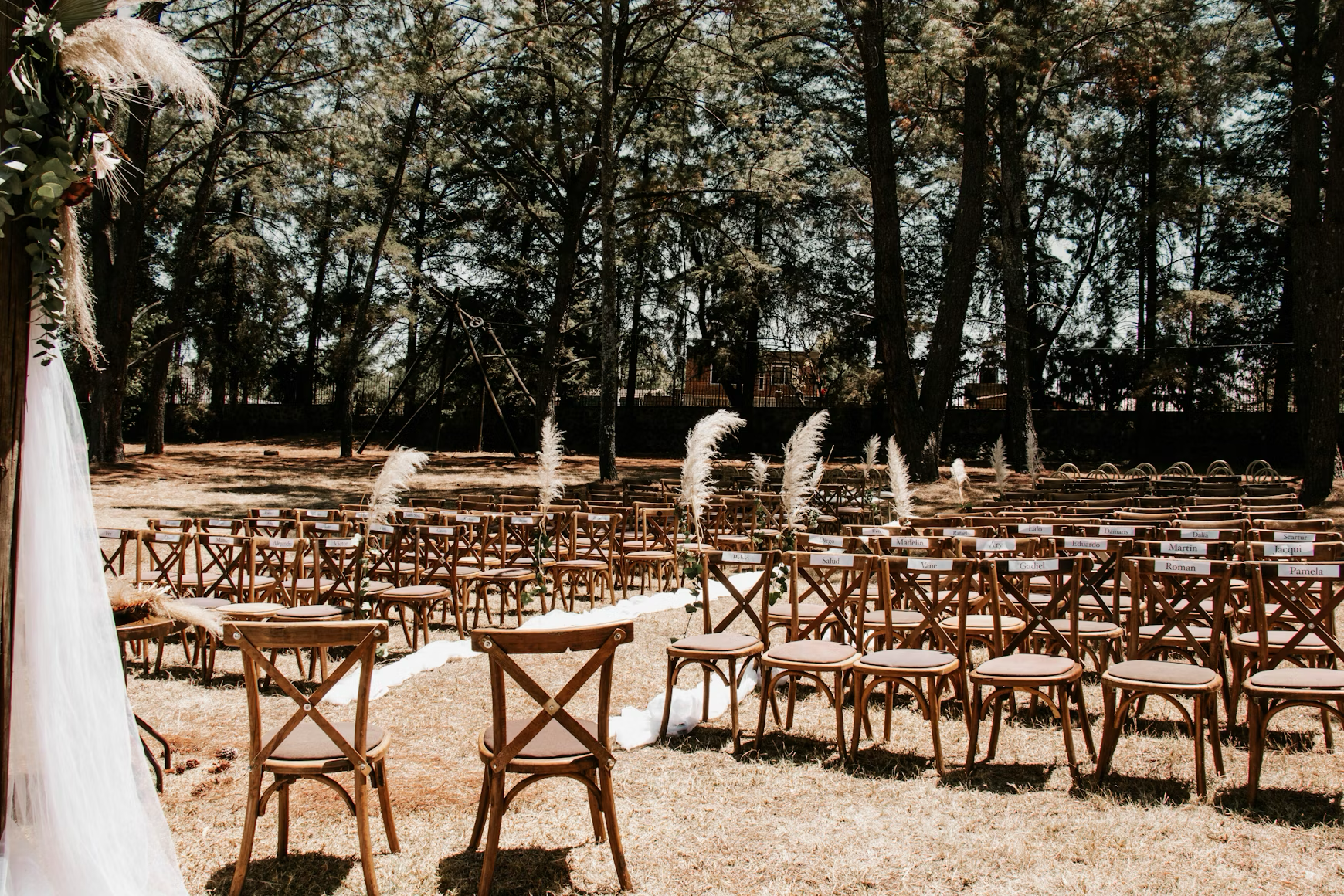
Weddings often feel harmless this way.
Nothing they ask for seems unreasonable when it’s taken on its own: a hairstyle, a color palette, something framed as “just for the day.”
That’s why the questions they raise aren’t always obvious. They tend to surface later, after everything has already been agreed to.
Weddings aren’t only celebrations.
Weddings function as rituals as much as celebrations. They mark love, while quietly organizing the people around it.
Roles begin to settle. Certain figures move toward the center, while others adjust around them, often without being told to.
Even those meant to be present often find themselves subtly managing how they show up.
When appearance comes into question at a wedding, it’s rarely just about how things look. It’s tied to preserving the shape of the moment, keeping everything in place.
Rituals prefer harmony over truth
In everyday life, individuality is praised. But in rituals, especially weddings, harmony takes priority.
What matters most is how the moment holds together visually, even if emotions don’t fully align.
The logic is simple: This day is about one story. Everything else should support it.
Within that logic, adjusting your appearance feels like cooperation instead of a loss. And cooperation is socially rewarded.
Why it rarely feels like coercion
Most people don’t register these requests as demands.
They come across as part of getting along, such as small adjustments that signal cooperation, consideration, and an ability to move smoothly with others.
That’s why any discomfort tends to surface later, and quietly.
Not as anger, or even resistance. More as a thin sense of distance that’s hard to place.
You complied. Nothing went wrong.
Still, you might notice that more of your attention went into not disrupting the moment than into actually being there for it.

What lingers is the sense that your presence was managed, even as you were fully there.
You were there, participating, smiling when expected.
But some part of you stayed alert: tracking how you came across, adjusting in small ways to make sure nothing about you pulled focus in the wrong direction.
It’s a quiet shift. One that doesn’t interrupt the celebration, but subtly changes how fully you inhabit it.
The difference between dressing for an occasion and reshaping yourself
There’s a meaningful distinction here, even if it’s hard to name.
Choosing an outfit that suits a formal event is situational. Altering parts of yourself to become more acceptable within a frame is something else.
The shift is subtle from “What fits this moment?” to “What version of me fits best here?”
That second question often goes unanswered out loud. But the body notices it anyway.
Over time, moments like this rarely stand alone. They blend into other small adjustments, places where it felt easier to adapt than to explain.
Nothing about them stands out as dramatic or decisive. They add up quietly, until adjusting yourself starts to feel normal.
So when discomfort surfaces, it often isn’t sharp or urgent.
It arrives with the quiet weight of repetition, shaped by how often you’ve learned to make yourself fit without being asked outright.
What the discomfort is actually pointing to
When something about the request lingers, it usually isn’t tied to hair, makeup, or clothing.
It has more to do with how you’re being seen, whether your presence feels fully welcome, or quietly negotiated.
And weddings, by design, are conditional spaces. They’re allowed to be. That doesn’t make them harmful.
It does suggest that the unease itself matters. Not as something that needs to be acted on right away, but as something worth noticing.
Over time, the question often shifts on its own.
It stops being about whether you should change your appearance for someone else’s wedding, and starts hovering closer to something harder to name.
How familiar it feels to make yourself a little smaller in order to belong. And when that familiarity begins to carry weight.
There doesn’t have to be a conclusion. Rituals pass. Photos fade. But the awareness of how easily we adjust ourselves tends to linger.
It settles quietly, leaving you more aware of how easily belonging can ask you to shrink.
If this feels familiar, you don’t need to do anything with it right away. Sometimes noticing how easily we adjust ourselves is enough.
That awareness tends to stay quietly and long after the event itself has passed.
