
Finding a genuine way to hang out with people often feels surprisingly tough when most plans revolve around the same routine of dinners, phone scrolling, or polite small talk. That’s exactly why plenty of young adults are skipping the usual bar nights to look for scary games to play with friends, turning a regular living room into a space for intentional thrills. Choosing to turn off the lights and test an old urban legend is about finding a unique way to bond.
When we experience a shared rush of adrenaline in a safe space, our brains naturally kick-start a survival mechanism that brings people closer than a standard conversation ever could.
Chemistry of Shared Survival
Understanding this phenomenon requires a look at how our nervous systems process fear within a secure, predictable environment. When you gather your inner circle for scary games to play in real life, your brain releases a potent cocktail of chemicals including cortisol, dopamine, and endorphins as it prepares for a potential threat.
Because your rational mind fully understands that you’re just sitting on a bedroom floor with people you trust, this physical response transforms from a toxic stressor into an exhilarating rush of pure euphoria. The shared survival of this artificial threat leaves the entire group feeling deeply connected, creating a unique biological shorthand for safety and mutual reliance.

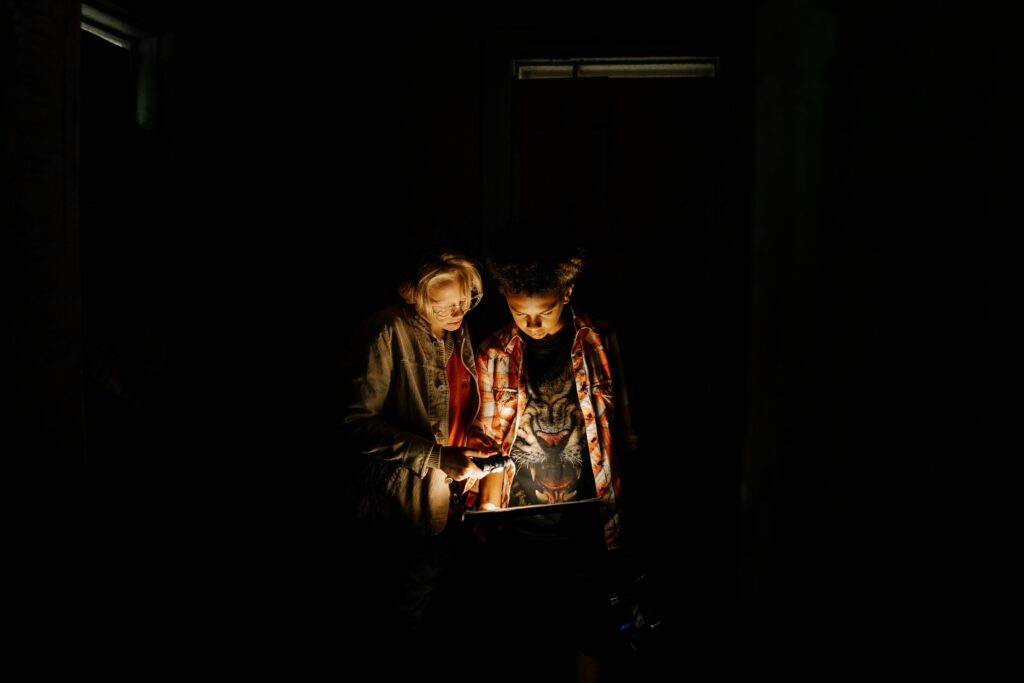
Dropping Our Daytime Defenses
This collective experience serves as a fascinating mirror for our everyday relationship dynamics. Choosing to participate in scary games to play with friends in real life forces us to drop our carefully curated social defenses and reveal our most vulnerable, unguarded reactions.
You can’t easily maintain a polished, distant persona when a sudden noise makes the entire room gasp in unison. In that exact moment of shared vulnerability, our brains register that we’re navigating uncertainty together, which instantly strengthens the invisible threads of empathy that keep our friend groups intact.
Finding Control in the Chaos
Furthermore, exploring these dark rituals allows us to process the broader, unstructured anxieties of modern life through a highly controlled and symbolic medium. The world outside can feel overwhelming, full of unpredictable financial pressures and complex social expectations that we can’t easily fix.
Gathering in a circle to experiment with scary games to play with friends provides a definitive boundary where the rules are clear and the danger ends the moment someone flips the light switch back on. It’s a form of emotional catharsis that lets us confront the unknown on our own terms, wrapped in the comforting warmth of communal laughter.

Turning Passive Viewers into Main Characters
When we examine the enduring popularity of scary games to play in real life, we see a collective rejection of passive entertainment in favor of active, participatory storytelling. We don’t just want to watch a cinematic main character explore a haunted hallway when we can be the ones holding the flashlight, making the decisions, and feeling our own pulses quicken.
Taking the lead in these scenarios builds a strange kind of collective confidence, transforming a quiet living room into a theater of shared imagination where everyone plays an essential role in keeping the campfire story alive.
Why the Post-Scare Laugh Feels So Good
The absolute best part of playing these games is always that giant wave of relief that hits the exact second the tension breaks. That sudden burst of loud, messy laughter after everyone gets startled is not just a random reaction, it is the sound of your body realizing everything is totally fine.
When you are gripping a friend’s arm in the dark and someone finally cracks a joke or turns the lights back on, the heavy atmosphere instantly vanishes. Experiencing those quick, harmless shocks together does not actually make people anxious, it just gives the whole group a fun, weirdly comforting story to talk about for the rest of the night.

Conclusion
Embracing the strange, shadowy world of voluntary frights is a powerful declaration that we want more from our relationships than superficial interactions. The next time you find yourself scrolling aimlessly through a media feed, consider gathering your circle, putting away the phones, and exploring some scary games to play with friends instead. You’ll likely find that the memories born from those breathless, dark moments will outlast any casual conversation, reminding you that sometimes you have to lose your cool together to find out who really has your back.
What’s Your Next Move?
If you’re tired of the same old weekend routines, try turning off the lights and exploring the hidden side of your friendships. Drop a comment below to share the creepiest game your inner circle has ever played, or pass this article along to the group chat to drop a hint for your next late-night gathering.