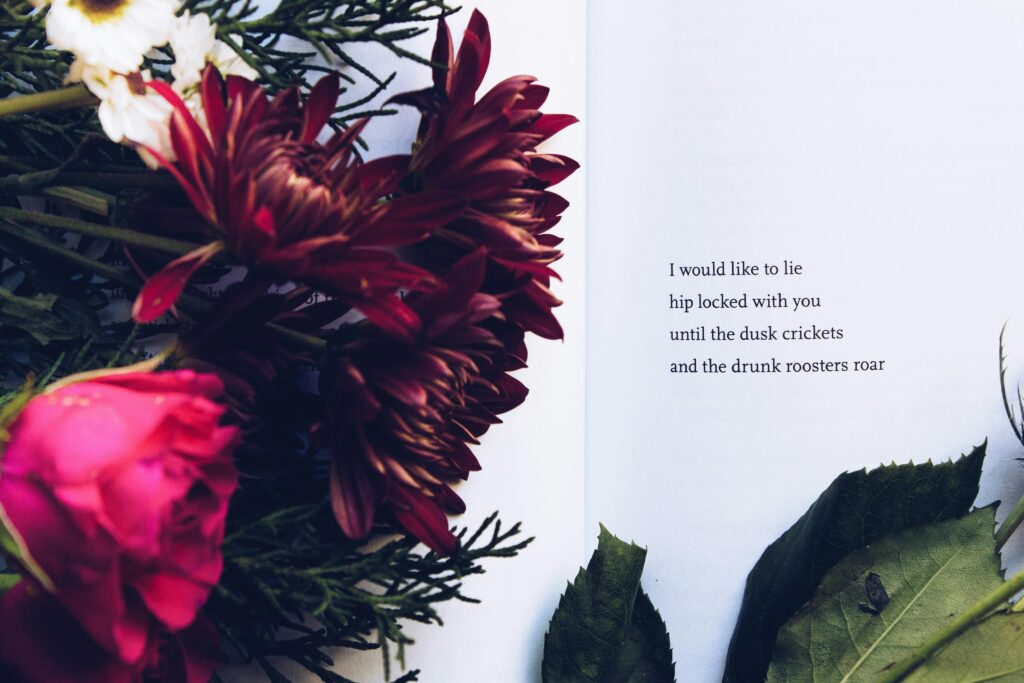
Cliché romantic poetry usually makes people roll their eyes, but there is a reason the classic four line structure has survived for centuries. It’s the ultimate template for cutting through emotional awkwardness, allowing us to drop our guarded walls by using a format everyone already knows by heart.
While modern internet culture has turned these lines into quick jokes, literary history shows that real poets and historic texts have used this exact rhythm to capture the messy, sweet, and sometimes painful realities of human connection.
Turning back to the official pages of literary history reveals how beautifully diverse this simple rhyme can actually be. Whether you’re looking for classic romance, biting historical satire, or honest observations on affection, here are roses are red violets are blue poems and historic literary works with verified origins to change how you see this timeless tradition.
1. “She bath’d with roses red, and violets blew,
And all the sweetest flowres, that in the forrest grew.” – Edmund Spenser
2. “The rose is red, the violet’s blue,
The honey’s sweet, and so are you.” – Anonymous (Gammer Gurton’s Garland)
3. “The rose is red, the violet’s blue,
Liest thou there asleep, while I weep for you?” – Anonymous (The Roxburghe Ballads)
4. “The rose is red, the violet blue,
My heart is locked, the key’s with you.” – Lord Byron
5. “The rose is red, the violet blue,
The pink is sweet, and so are you.” – Traditional Folk Variant

6. “The rose is red, the violet blue,
God made me, and he also made you.” – Shaker Hymn Variant
7. “The rose is red, the violet blue,
The gillyflower pale, and so are you.” – Anonymous (Covent Garden Drollery)
8. “Roses are red, violets are blue,
I’ll never find another friend quite like you.” – Robert Burns
9. “The rose is red, the violet’s blue,
Our love is old, but ever new.” – Christina Rossetti
10. “Roses are red, violets are blue,
Time passes quickly when I am with you.” – Emily Dickinson
11. “The rose is red, the violet blue,
The world is wide, but paths are few.” – Thomas Hardy
12. “Roses are red, violets are blue,
Life is a shadow without the true you.” – William Blake
13. “The rose is red, the violet’s blue,
The world is crazy, and so are you.” – Lewis Carroll
14. “Roses are red, violets are blue,
I am content to be broken for you.” – Sara Teasdale
15. “The rose is red, the violet blue,
Politics change, but my heart stays true.” – Political Broadside Poet

16. “Roses are red, violets are blue,
The winters are cold, and our comforts are few.” – Colonial American Diary Variant
17. “The rose is red, the violet blue,
Debt is a burden, but kinship is too.” – Benjamin Franklin
18. “Roses are red, violets are blue,
Fashion is fleeting, but grace pulls us through.” – Jane Austen
19. “Roses are red, violets are blue,
I am writing these lines to find my way back to you.” – Langston Hughes
20. “The rose is red, the violet blue,
The city is loud, but my thoughts rest on you.” – Walt Whitman
21. “Roses are red, violets are blue,
Do not believe that my silence means I forgot you.” – Pablo Neruda
22. “The rose is red, the violet blue,
Spring always returns to see the world through.” – Robert Frost
23. “Roses are red, violets are blue,
The mirror reflects what the heart always knew.” – Sylvia Plath
24. “The rose is red, the violet blue,
We choose our own family out of the blue.” – Maya Angelou
25. “Roses are red, violets are blue,
Tomorrow is waiting for something brand new.” – Carl Sandburg

Why the Format Still Works After 430 Years
The first version of these lines appears in Edmund Spenser’s The Faerie Queene in 1590. By 1784 it was already in nursery rhyme collections as a template anyone could complete.
In 430 years, no other love poem format has stayed this universal, and the reason is exactly what it seems: two familiar lines that carry the whole tradition, then two lines that are yours, and suddenly you’ve made something that means something even if you’ve never written a poem before in your life.
Key Takeaway
The format asks you to finish a thought, and that’s a much lower bar, which turns out to be exactly the right one for the things that actually need saying. This simplicity is precisely why “roses are red violets are blue” poems have endured, they give anyone the perfect starting line to express what is otherwise hard to articulate.
If you’re curious about why that mechanism works, why a four-line structure that everyone knows by heart is still one of the most emotionally honest forms of communication we have, the next piece gets into exactly that.
Read next: What “Roses Are Red” Poems Actually Say About How We Feel