Kids often step out feeling cranky, overstimulated, disconnected, or emotionally scattered. The trip technically stayed quiet, yet it somehow didn’t feel calm.
That’s probably why more parents have started bringing back simple conversation games, imagination games, and little family challenges during travel. These small moments of play quietly support emotional regulation, creativity, communication, and even memory development in ways people often underestimate. That’s where simple fun games to play in the car become surprisingly powerful.
The Backseat Brain Gets Restless Faster Than Adults Realize
Children experience long travel differently from adults. Grown-ups understand the destination, the timeline, and the reason for the trip. Kids mostly experience the physical part of it. Sitting still for hours feels huge to them because their brains and bodies naturally want movement, novelty, and interaction.
Once boredom settles in, emotional overload tends to follow quickly. Complaining, fighting siblings, random meltdowns, and constant questions about arrival times usually more often are signs of a child trying to cope with overstimulation and lack of engagement at the same time. That’s why simple road trip games for kids help interrupt that spiral before it fully takes over. A guessing game or silly conversation gives the brain something active to focus on, which can feel emotionally grounding during long stretches of travel.

Imagination Is Basically Exercise for a Child’s Brain
One reason open-ended games work so well is because they invite children to create instead of simply consume. A tablet delivers entertainment directly to them, and imaginative play asks them to participate in building the experience. That difference matters more than it seems.
Games like storytelling chains “Would you rather?”, or made-up character adventures encourage kids to think flexibly, improvise ideas, and respond socially in real time. Those moments strengthen creative thinking and communication skills naturally because children are playing. That’s also why many parents notice their children becoming more talkative during road trips without screens, the brain finally has space to wander a little. Among all the fun games to play in the car, the best ones usually leave room for imagination instead of strict rules.
Shared Laughter Helps Kids Feel Safe
One underrated part of family games is emotional connection. Laughing together changes the atmosphere inside a car almost instantly. Children regulate emotions through interaction more than most adults realize. A funny moment with parents or siblings creates a small sense of safety and attention, especially during environments that can otherwise feel restrictive or overstimulating.
Even quick little games can reduce tension because kids stop focusing entirely on discomfort or boredom. Instead, their attention shifts toward participation and connection, that emotional shift matters. A child who feels connected tends to handle frustration more calmly than a child who feels ignored or isolated behind a screen for hours.

Boredom Isn’t Always the Enemy
Modern parenting sometimes treats boredom like an emergency that needs immediate fixing. Yet boredom actually plays an important role in childhood development. The mind starts inventing things once external stimulation slows down. That’s usually when kids begin creating stories, asking strange questions, making observations, or turning random objects into games.
Long drives naturally create those empty spaces, and simple road trip games for kids can guide boredom into creativity instead of frustration. A child staring out the window while inventing stories about clouds or imagining lives inside passing houses may actually be doing important mental work. Quiet imagination helps develop focus, emotional processing, and independent thinking. Ironically, the moments that seem unproductive often become the healthiest for a growing brain.
Conversation Games Build Real Communication Skills
A lot of childhood communication now happens through short responses, fast videos, or fragmented online attention. Car games slow conversations down again. That’s part of why games like collaborative storytelling feel so valuable. Kids practice listening, responding, taking turns, and expanding ideas instead of just reacting quickly.
These moments also give parents small windows into how children think emotionally. Random road trip conversations often reveal fears, humor, curiosities, and personality traits that don’t always appear during busy daily routines. The car becomes one of the few places where nobody can immediately walk away, check notifications, or disappear into separate rooms. Oddly enough, that trapped feeling sometimes creates better family conversations than people expect.
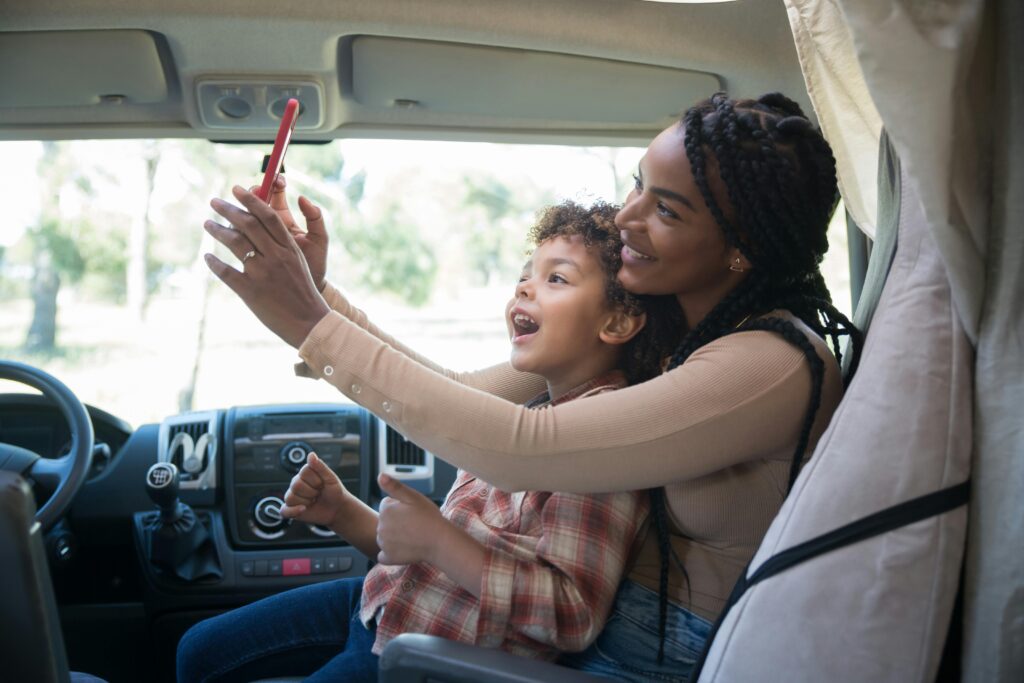
Simple Games Create Lasting Memories
Most adults remember strange songs, funny arguments, snack disasters, and random games that somehow became family traditions. That emotional memory happens because shared play creates participation instead of passive consumption. Kids become part of the experience instead of merely observing it through a screen.
Even repetitive little rituals can become deeply nostalgic later. A silly guessing game played every summer road trip may sound insignificant in the moment, yet it often becomes one of the memories children carry longest into adulthood. That’s one reason families keep returning to classic fun games to play in the car generation after generation, they create connection more than entertainment.
Screen Time is Balance Matters
None of this means screens are automatically bad. Sometimes parents genuinely need a quiet hour to survive a long drive, and that’s completely understandable, however the bigger issue is balance.
A full day of passive screen consumption often leaves kids mentally tired without actually helping them process restlessness or emotional energy. Mixing in conversation, imagination games, music, and interactive play creates a healthier rhythm during travel. Even alternating one hour of screen time with 30 minutes of shared play can completely change the mood inside the car. It’s simply creating moments where children feel engaged, connected, and mentally active instead of endlessly distracted.
Key Takeaway
The best family road trips rarely become memorable because everything went smoothly. Usually, the stories people retell years later come from the messy, funny, unexpected moments shared together along the way.
Simple road trip games for kids help children self-soothe, stretch their imaginations, build communication skills, and feel emotionally connected during long hours on the road. In a world overflowing with instant digital distraction, those small moments of shared play quietly become something pretty meaningful. And somewhere between the terrible karaoke, ridiculous made-up stories, and endless snack crumbs on the floor, the trip itself starts becoming part of the adventure.
Looking for even more family-friendly travel ideas and screen free activities? Save this article for your next road trip and share it with another parent who’s already hearing “Are we there yet?” before the car even leaves the driveway.