
The emotional fallout of a fragmented relationship between a parent and a child doesn’t follow the clean, predictable lines of standard mourning. When we lose a loved one to death, society offers us a recognizable blueprint for sorrow, giving us funeral rituals, communal condolences, and a definitive end point that allows our brains to process the separation.
However, when a parent is alive but emotionally detached, or when a mother or father is completely cut off from daily milestones, the resulting sadness turns into something known as ambiguous loss. It’s a confusing, exhausting state of existence where the person is physically gone but psychologically present in every single room, leaving the family members trapped in a permanent state of waiting. This internal friction means that missing out on your child’s life becomes a heavy, circular grief that simply doesn’t know where to land or how to heal itself.
When the Loss Doesn’t Have a Name, the Grief Has Nowhere to Go
When a parent quietly misses out on years of their child’s life whether because of a brutal work schedule, a custody arrangement, estrangement, or simply a slow drift that nobody made a single decisive choice to create, there’s no acknowledgment. No ritual. Nothing to mark that something real was lost, even though something absolutely was.
Psychologist Pauline Boss spent decades studying exactly this kind of loss and eventually gave it a name: ambiguous loss. Her research started with families of soldiers missing in action, but what she kept running into was a second category that surprised her: fathers who were home every single night and still somehow absent. Physically in the house, emotionally somewhere else. She realized the grief those families carried was just as real as the grief of the families waiting for soldiers to come home, it just had no name, no ceremony, no social permission to exist.
That’s still true today. The absent parent experience, in almost all its forms, is a grief that people carry privately because nobody taught them they were allowed to call it grief.

The Parent Is Hurting. The Child Is Hurting. And It isn’t the Same Pain.
What makes this complicated is that the parent and the child are almost never hurting in the same way at the same time, even when they’re hurting over the same thing.
For the parent, it tends to move in waves. The missed kindergarten play, the teenage years that went by on alternate weekends, the version of their kid who learned to ride a bike and didn’t think to call. Barack Obama wrote about this with unusual honesty in a 2009 PARADE essay: “There were many days out on the campaign trail when I felt like my family was a million miles away, and I knew I was missing moments of my daughters’ lives that I’d never get back. It’s a loss I will never fully accept.” He was one of the few public figures to say it plainly, that being the one who left, even for reasons that felt justified, still costs you something you can’t get refunded.
For the child, the experience is different and often harder to articulate, because kids don’t always know how to grieve someone who’s still alive. What Boss found was that children tend to keep an absent parent psychologically present even when they’re physically gone. The grief sits there, unfinished, somewhere between hope and resignation. Rupi Kaur described it in Milk and Honey as being “a war, the border between two countries, the collateral damage.” That’s the thing a lot of them are living.
The Hardest Part: When You Know the Absence Was Partly Your Own Doing
There’s a version of this grief that’s even harder to talk about: the one that belongs to parents who know, quietly and honestly, that the absence was at least partly a choice. More like a hundred small ones over time. The work trip that got prioritized over the school concert. The new relationship that quietly took up the space the old routines used to occupy. The years that accumulated before anyone noticed how much distance had grown.

This kind of guilt tends to surface at the worst possible moments: a graduation photo someone else posted, a grandchild’s face that looks exactly like the child you barely knew at that age, a birthday that comes and goes without a call. And there’s no framework for it, because society doesn’t really have a way to hold a parent who caused their own absence. You’re somewhere in the middle, which is the loneliest place to be. Iyanla Vanzant’s words are usually quoted for the child’s healing:
“Forgive yourself for believing there was something lacking in you because he wasn’t there.”
However there’s a version of that forgiveness the parent needs too, one that’s harder to find because it involves looking honestly at the gap between the parent you intended to be and the one you actually showed up as.
Why This Kind of Grief Is So Hard to Say Out Loud
There’s a reason missing out on your child’s life quotes get searched so heavily, and it’s that most of them have been sitting with something they can’t say out loud, either because the people around them don’t know how to respond, or because the situation is too tangled with fault and grief to bring up without it becoming a whole thing.
Finding a sentence that names exactly what you’re feeling is, for a lot of people, the closest thing available to being told that what they’re carrying is real. When someone reads “children remember who showed up, not who promised” and something opens up in their chest, that’s not self-punishment. That’s the relief of finally having a thing named that’s been living unnamed for years.
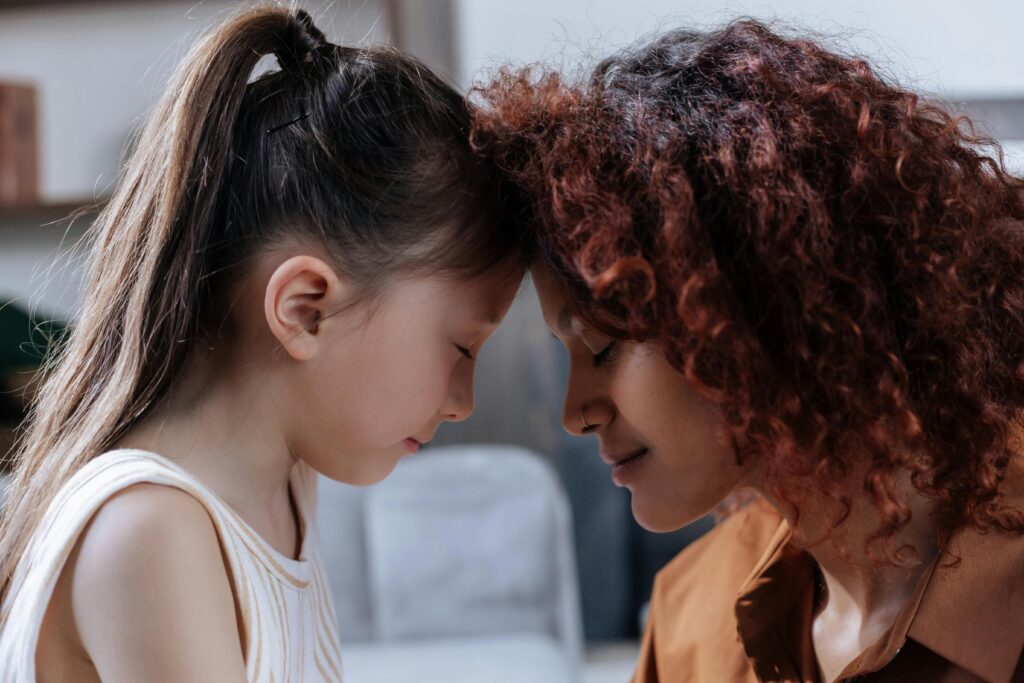
The grief of missing your child’s life doesn’t fit neatly into victim or at-fault. Most of the time it’s messier than either of those, and the messy ones are the hardest to process alone.
“Too Late” Is Not the Same as “Never”
Pauline Boss was clear that ambiguous loss, the kind without clean endings, closure, ceremony doesn’t get resolved. What you can do is learn to hold the weight of what was missed without letting it be the only story. Showing up late is smaller and harder and more complicated than showing up on time. The child who spent years learning to be okay without you in the frame didn’t plan on needing to trust you again. The parent who comes back carrying full awareness of what they cost someone isn’t walking into an easy situation. None of that gets softened by wanting it to be different.
A late, imperfect, complicated presence is still a genuinely different story than an absence that never ended. And sometimes that difference is enough to start with.
Key Takeaway
Missing out on your child’s life is a grief most people carry alone partly because the person inside it isn’t always sure they’ve earned the right to name it.
Unnamed things find other ways to surface in the birthdays that hit differently than expected, in the quiet that follows a milestone nobody told you about. Giving it a name, sitting with its full weight, is usually the first step toward doing anything real about it. And doing something real about it, even late, even imperfectly, is almost always still worth doing.