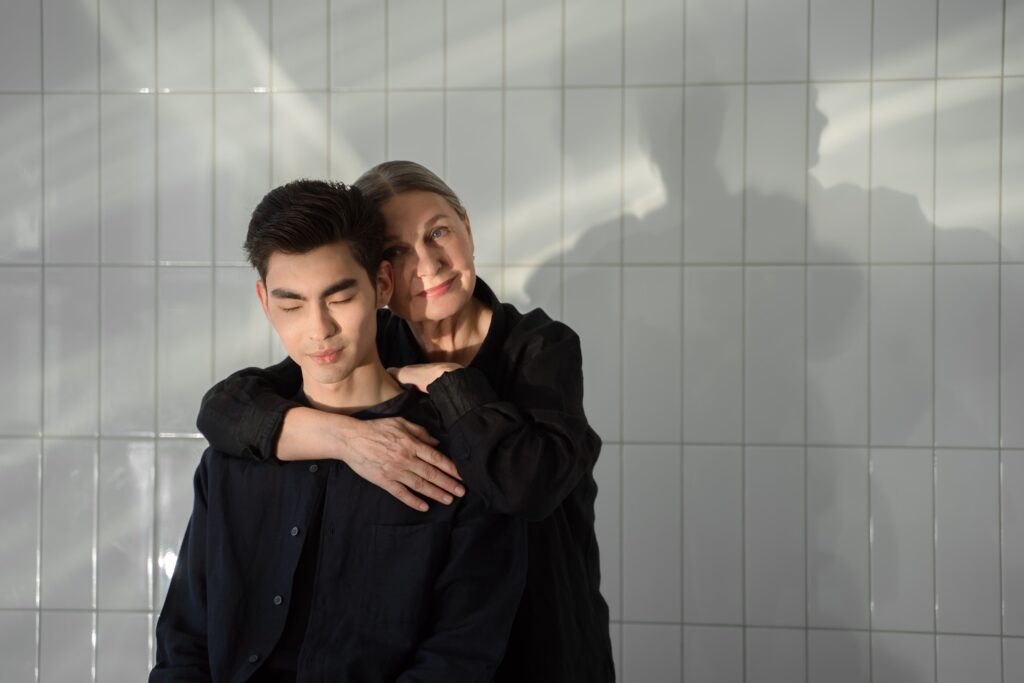
A mother sits across from her teenage son at dinner and watches him shut down mid-conversation, jaw tight, the way boys learn to do when something’s hurting and they haven’t been given the language for it yet. She’s watched it develop slowly, year by year, as the world outside their home kept teaching him that feeling things too openly was something to be ashamed of. And she thinks: “I didn’t teach him that. But I also didn’t do enough to unteach it.”
That quiet guilt is one of the most common things mothers of sons carry, and it’s finally starting to be spoken out loud.
The Old Script Isn’t Working Anymore
For generations, the unwritten rule of raising boys was something like: keep them busy, keep them moving, and don’t let them dwell. Feelings were fine in theory, but in practice they got redirected: anger was acceptable, sadness wasn’t, vulnerability was something to grow out of. The result, as researchers in emotional intelligence have documented consistently, is a generation of men who are physically present in their relationships but emotionally at arm’s length because nobody ever taught them how to stay in the room with what they feel.
Barack Obama said it directly in a 2025 interview: “There are some particular issues with boys that as a society we are not addressing.” He was talking about emotionally intelligent, competent men and what it actually takes to raise them, which is more intentional work than most parenting books admit to. What’s quietly shifting, though, is that mothers are starting the conversation at home, and they’re starting it earlier than their own mothers did.

Why the Words Actually Matter
Here’s something that tends to get overlooked in conversations about raising emotionally intelligent sons: the specific language a mother uses with her son is modeling. When a mom says to a 7-year-old “it’s okay to feel sad about that,” she’s teaching him that naming an emotion is a valid, even courageous, response to experiencing one. When she says “I’m proud of how you handled that, you stayed kind even when it was hard,” she’s rewiring his understanding of what strength actually looks like.
Daniel Goleman, whose research on emotional intelligence essentially built the modern understanding of the field, put it this way: “Emotional intelligence is the foundation of healthy relationships.” That sentence sounds obvious until you realize how rarely emotional intelligence is treated as something worth teaching boys with the same seriousness as reading, sports, or discipline.
Mothers are increasingly the ones closing that gap, often through the simplest possible means: saying out loud what they actually mean, consistently, in the moments that matter.
Shannon L. Alder’s words have been circling the internet for years now because they name what so many mothers are actually trying to do: “To be a mother of a son is one of the most important things you can do to change the world. Raise them to respect women, raise them to stand up for others, raise them to be kind.” It’s not a soft sentiment, it’s a program. And it starts with language.

The Softness That Builds Real Strength
One of the most persistent myths about raising emotionally intelligent sons is that nurturing their emotional awareness will somehow make them less capable, less resilient, less prepared for the harder edges of the world.
Cheri Fuller addressed this directly in What a Son Needs From His Mom: “A mother’s love doesn’t make her son more dependent and timid; it actually makes him stronger and more independent.” The research consistently backs this up. Boys who grow up in households where emotional expression is modeled and encouraged tend to develop stronger self-regulation, more stable relationships, and better capacity for handling failure. Not weaker. Stronger.
What Brené Brown says in Daring Greatly gets at the mechanism behind this: “First and foremost, we need to be the adults we want our children to be.” It’s not about what you tell your son to feel or how you instruct him to behave. It’s about what he watches you do with your own emotions, your own struggles, your own moments of not having it together. A mother who lets her son see her navigate grief or frustration or fear, and models what it looks like to process those things honestly, is teaching him something no classroom and no sports coach will ever cover.
Princess Diana, one of the most discussed mothers in modern public memory, said it plainly: “I want my boys to have an understanding of people’s emotions, their insecurities, people’s distress, and their hopes and dreams.” She was describing basic human literacy, the ability to read another person’s interior world with care rather than indifference. That kind of literacy starts at home, and it starts with what a mother is willing to say out loud.

What “Finally Saying It Out Loud” Actually Looks Like
The shift that’s happening right now in how mothers talk to their sons looks more like this: a mom who catches herself saying “boys don’t cry” and decides, mid-sentence, not to finish it. A mother who tells her teenage son she’s proud of him for apologizing to a friend, not for winning a game. A woman who texts her grown son a quote from Maya Angelou at 11pm because it said something she’d been trying to say for years and couldn’t quite land on her own.
Maya Angelou’s “People may forget what you said, but they’ll never forget how you made them feel” has become one of the most-shared to my son quotes in recent years, and it’s worth asking why. The answer is probably that it reframes legacy. It asks a mother to consider not what she’s achieving through her son, but what he’ll carry forward about how she made him feel while she was raising him. That’s a different standard entirely, and it’s one that a lot of mothers are quietly holding themselves to now.
The quotes that are gaining traction are the ones with teeth: “I’m not raising a boy. I’m raising someone’s future partner, friend, and leader.” Or Walter M. Schirra Sr.’s: “You don’t raise heroes, you raise sons. And if you treat them like sons, they’ll turn out to be heroes, even if it’s just in your own eyes.” These are the words of people who understood that the work is in the ordinary moments, not the extraordinary ones.

The Conversation That’s Changing a Generation
What’s genuinely new about the way mothers are approaching raising emotionally intelligent sons today isn’t the intention, mothers have always wanted good things for their boys. What’s new is the willingness to name the obstacles honestly and to push back on the cultural conditioning that kept generations of boys emotionally stranded. T.F. Hodge wrote in From Within I Rise that “mother is her son’s first god; she must teach him the most important lesson of all: how to love.” That lesson shapes how a boy will move through every significant relationship in his adult life.
And it begins, really, with a mother deciding that what she says to her son matters, and then saying it anyway, even when it feels vulnerable, even when the culture hasn’t caught up yet, even when the words are imperfect. The quotes that are being shared and pinned and texted between mothers right now are permission: to say the real thing, to name the soft things alongside the strong things, and to raise a boy who knows the difference between toughness and wholeness.
Key Takeaway
Raising emotionally intelligent sons is the accumulated weight of a thousand small choices, made mostly in quiet moments, about what you’re willing to say out loud and what you’re willing to model. The mothers speaking these words are trying to raise honest ones, the kind who know how to feel things without being undone by them, and how to love people without keeping score. That’s the lesson underneath all the quotes and it’s one worth passing on.